
Hometown Sentiments | Xi'an New Year, the Most Chinese – My Hometown is in Shaanxi
Wang Yueqing
AG International Media
December 30, 2025
I am a native of Xi'an, Shaanxi.
For generations, for hundreds of years, my family has cultivated and lived on this fertile land nestled between the loess plateau and the Qinling Mountains.

Shaanxi, one of the important cradles of Chinese civilization, boasts a rich and splendid history spanning over five thousand years. Thirteen dynasties have established their capitals here, from the Western Zhou to the Qin, Han, Sui, and Tang dynasties, and up to the present day. Shaanxi has witnessed countless glorious moments of human civilization and attracts people from all over the world to explore and admire it.
Shaanxi Province is in Northwest China, situated on the banks of the Yellow River and at the foot of the Qinling Mountains.

To the north lies the vast and rugged Loess Plateau, in the central region the fertile Guanzhong Plain, and to the south the majestic and picturesque Qinling-Bashan Mountains. The convergence of mountains and rivers has nurtured the bold, simple, and profound character of the people of Shaanxi.
And of all my memories, what haunts my dreams most is the New Year celebrations in Shaanxi

The Spring Festival is the most important traditional festival for the Chinese nation. In ancient times, people prayed for a bountiful harvest and peace for the country and its people through sacrificial rites.
Today, Xi'an has transformed the Spring Festival into a unique and captivating cultural calling card –

"Xi'an Spring Festival: The Most Chinese".
This is a carefully crafted urban cultural IP developed over many years. "Intangible Cultural Heritage", "Food", "Lantern Festivals and Performances", "Cultural Relics and Study Tours", and "Tourism and Leisure" make Xi'an's Spring Festival both traditional and modern; both profound and vibrant.

No matter how the world changes, the local flavor and customs of Shaanxi people celebrating the Spring Festival have never changed.
Starting in the twelfth lunar month—drinking Laba porridge, slaughtering pigs and sheep, steaming flower-shaped buns and steamed bowls, grinding tofu, hanging vermicelli, and preparing New Year's goods. Amidst the busyness, there is a strong anticipation for family reunion and the New Year.
On New Year's Eve—cutting papercuts, pasting Spring Festival couplets, hanging lanterns, setting off firecrackers, staying up late to welcome the New Year, and giving out lucky money—all in a lively and festive atmosphere, welcoming the arrival of the New Year.

During the first month of the lunar calendar—ancestor worship, kitchen god worship, visiting relatives and sending blessings, wives returning to their parents' homes, steaming dumplings on the fifth day of the Lunar New Year, visiting temple fairs, and celebrating the Lantern Festival. Folk performances, dragon and lion dances, stilt walking, and land boats fill the Guanzhong Plain with the sounds of gongs and drums, creating a festive atmosphere.

After a satisfying meal, people will venture into the brightly lit city—the city wall lantern exhibition, the Tang Dynasty Never Sleeping City, the Tang Paradise, museums, old neighborhoods, and distinctive towns, enjoying performances and lantern displays along the way.
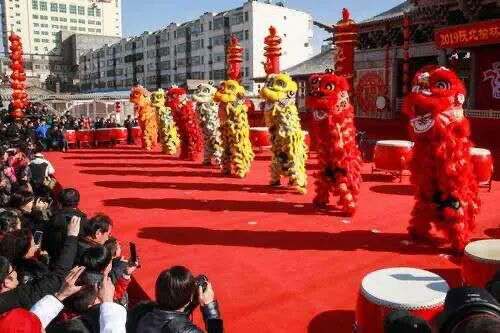

"The Song of Everlasting Regret," "The Mighty Qin," Huayin Laoqiang opera, Ansai waist drum music, Shaanxi folk songs, Qinqiang opera, Meihu opera, Wanwanqiang opera… Dressed in Tang and Hanfu attire, one can travel through time amidst light and shadow, immersing oneself in the vibrant atmosphere of Shaanxi's Spring Festival celebrations.
This is not merely a festival, but a living history of folk culture, embodying the Shaanxi people's aspirations and pursuit of a better life.

Now, I live in Canada. Shaanxi is my root, China is my soul, and Canada is my second home.
As overseas Chinese, we live amidst different cultures and have a responsibility to be bridges connecting us. May we all transform our love for our hometown into the power of understanding and exchange, allowing friendship to transcend mountains and seas and remain ever new.
Finally, I sincerely welcome everyone to come and visit Shaanxi.
Don't forget to sample authentic Shaanxi cuisine: a bowl of mutton stew with bread, a roujiamo (Chinese hamburger), liangpi (cold skin noodles), heluo (a type of noodle), hulutou (a type of offal soup), and a hearty bowl of long, wide biang biang noodles.
One bite, and the flavors of the New Year, the warmth of home, and memories will all come rushing back.

About the Author
Dr. Wang Yueqing has long been dedicated to the study and research of literary knowledge and computer information, advocating lifelong learning and the integration of knowledge and practice. Her leisure life is rich and colorful; she enjoys singing, dancing, reciting, and playing musical instruments, and practices running, table tennis, badminton, yoga, Tai Chi, Baduanjin, Kung Fu fan, and traditional martial arts for physical and mental cultivation. In her spare time, she likes to record the little things in life through writing, depicting the beauty of life with simple and sincere strokes.


Comments